


Key takeaways on tweakment results from topical formulations
- Biotech‑derived actives are enabling clinical‑level results in topical skincare.
- Debut’s BeautyORB platform screens billions of molecules using AI and skin genomics.
- New ingredient DermCeutical EDL targets cellular pathways linked to firmness and elasticity.
- Clinical trials show major improvements in fine lines, sagging and elastin production.
- The technology offers a lower‑cost, no‑downtime alternative to in‑office treatments.
- Biotech moves into the mainstream as Debut targets in-office treatment results
As biotech ingredients become increasingly important when formulating cosmetics, US biotech firm Debut’s founder and CEO Joshua Britton, and Director of New Business Development Alex Kelley, spoke in a special webinar for CosmeticsDesign about how novel biotech‑derived actives and delivery systems are achieving outcomes historically reserved for in‑office procedures — without procedural risk, recovery time or side effects.
San Francisco-based Debut is a biotech firm that specialises in cosmetic ingredients. In 2024, the business signed an agreement with L’Oréal to develop more than a dozen bio‑identical ingredients to replace conventionally sourced ingredients that are currently used in the business’ brands across skin, hair and colour cosmetics.
Biotech’s role in addressing the hallmarks of skin longevity
During the broadcast, CEO Britton said skin longevity is understood through the 14 hallmarks of longevity, but that many of these hallmarks currently lack effective ingredient solutions – therefore creating an opportunity for biotech to play a transformative role. However, this cutting-edge tech also carries a hefty price tag.
“We have invested 100m dollars in R&D,” he explained. ”Biotech is something that beauty brands are moving into but it’s still very expensive.”
Britton explained that Debut works with brands to help them “become clinical”. The business’ innovation model consists of three stages: AI‑driven ingredient discovery; clinical validation, which Britton said has evolved significantly; and finally, commercialisation.
The company uses its proprietary BeautyORB tech platform to identify new ingredients at speed and scale.
“We screen 96 billion ingredients for that perfect response,” he said. “We test every gene in the skin to see how it responds to that ingredient. We are screening 20,000 molecules a minute. It allows us to discover novelty; new and exciting things that can change the course of beauty.”
DermCeutical EDL: clinical results rival in‑office treatments
Debut recently launched DermCeutical EDL – a topical bioactive ingredient developed using AI and biotechnology to clinically improve skin tightness and firmness by targeting cellular pathways.
“We don’t release ingredients unless they have staggering performance.” Britton said, adding that the new ingredient is “better at skin renewal than vitamin C.”
Developed through Debut’s tech platform, which integrates AI, skin genomics and biotechnology, DermCeutical EDL has demonstrated strong results in reducing fine lines and sagging skin.
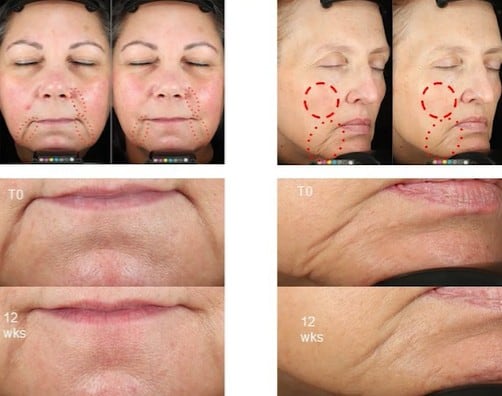
According to the business, the ingredient works by biologically activating the same cellular pathways targeted by in‑office aesthetic technologies, enabling clinically proven improvements in firmness and tightness.
When applied topically, DermCeutical EDL activates dermal fibroblasts to boost elastin — essential for firm, resilient skin. It works to reduce cellular stress by downregulating stress‑related proteins and reversing adverse gene expression, supporting long‑term dermal integrity and creating a visibly lifted appearance.
According to Britton, the ingredient gives the most impressive clinical performance he has ever seen. “Even at a low active level (of 0.65) it still outperforms other ingredients,” he said.
Based on these impressive clinical results, Debut is positioning the ingredient as an alternative to in‑office procedures for people seeking results without recovery time.
Tweakments more popular than ever
According to Debut’s Director of New Business Development Alex Kelley, “tweakments” are now more popular than ever.
“We really feel like this is the future of topical treatments,” she shared.
Kelley also said the non‑surgical skin treatments market is forecast to reach US$1.62bn by 2029. Beauty consumers, she added, are increasingly science‑savvy, but cost‑conscious — and topical biotech solutions can offer a lower‑priced alternative to in‑office procedures.
In the recent broadcast, Kelley showcased several beauty product concepts that could be formulated with the ingredient.
These innovations included:
• BioLift Filler Effect Serum for needle‑free skin tightening
• BioLift CelluSculpt Contour Stick, a pigmented product providing instant contour
• BioLift Blurring Lip Tint for immediate plumping and colour
• BioLift Neck Therapy Complex, a night‑time neck‑firming treatment
• BioLift FraxEffect Face Mask, a jelly‑textured, leave‑on bedtime mask with instant effects
Across the beauty and personal care market, demand for skin‑tightening solutions is rapidly increasing.
While this consumer need has always been a focus for the skincare category, demand for products to tackle this issue has been skyrocketing in recent years due to widespread use of GLP‑1 receptor medications, which are associated with rapid weight loss and resulting skin laxity.
To find out more about biotech and cutting-edge skincare ingredients and watch the free webinar in full, sign up here.


